3 REASONS WHY SOIL CONSERVATION IS SO IMPORTANT

Most of us have probably realized it by now; that soil is necessary for the sustainability of humankind. It might sound a little cliché yet what we sow is what we harvest.

What we have done to take care of our environment has manifested in so many ways, just like the disasters we have encountered in the past or the tragedies our ancestors and elderly have gone through. Some of these may not affect us deliberately, while some gave us memories that we can never forget and even pass on to our juniors. There are things we really had to learn the hard way.

While we have started some precautionary and conservation measures, here are a few reasons why soil protection is imperative:

  1. The soil is literally the foundation of plant life. A tree will not be a tree without soil. While there are some plants that can live in water or air, most plants need to be rooted to the ground.

It is the soil that provides nutrition to this plant life. It is through this vegetation that nourishes the humankind and the animal kingdom. Plants are important resource of food and fuel and of wood and other by-products that make our other life functions possible.

  1. The soil additionally supports the animal kingdom. Our agriculture also relies on soil, for its location and for other functions to be derived from its existence. It will be almost impossible to support the animal and human life without land. Biodiversity relies on soil at all times.
  2. The soil is necessary for water supply. This is the magic of nature. The land is also necessary to ensure the quality of water we derive from our earth. Soil and water co-exist. So do we and soil co-exist? Taking good care of our soil equates to taking care of our water supply.

There are always a lot more reasons to conserve soil. However, I believe that the above are simply enough for us to start conserving our land resources as soon as we can.

Soil moisture conservation techniques

What is Soil Moisture Conservation Technique?

The main objective of soil moisture conservation is to minimize the amount of water lost from the soils through evaporation (water loss directly from the soil) and transpiration (water loss occurring through the plants) – or combined, the evapotranspiration. Preserving soil moisture is important means to maintain the necessary water for agricultural production, and also helps minimize irrigation needs of the crops. This is especially important in areas where rainwater and/or groundwater resources for irrigation are scarce or decreasing due to climate change or other causes.

Soil Moisture Conservation Techniques Implementation

There are a variety of methods that can be used to conserve soil moisture. Most of these soil moisture conservation techniques are relatively low cost and complexity approaches, primarily relying on the presence of required materials and technical capacity locally. Many of the methods rely on providing some kind of cover for the soil to minimize evapotranspiration and direct soil exposure to heat and sun. Generally, most methods used for soil quality improvement and conservation, will also yield benefits to soil moisture conservation. Examples of methods for reducing excess soil moisture loss include following:

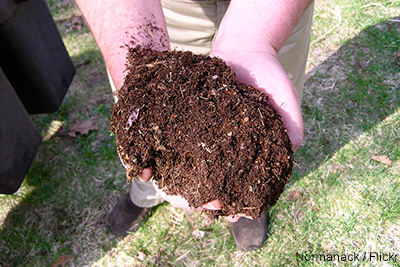
  • Spreading manure or compost over the soil – this minimizes evapotranspiration and also provides valuable nutrients to the soil through processes of decomposition
  • Mulching – mulch is a layer of organic (or inorganic) material that is placed on the root zone of the plants. Examples of mulch materials include straw, wood chips, peat. Inorganic mulch in form of plastic sheeting is also used. Mulching is most suited for low to medium rainfall areas, and less suited for areas with very wet conditions.
  • Conservation tillage – reducing or, in extreme cases, completely eliminating the tillage to maintain healthy soil organic levels which increases the soils capacity to absorb and retain water. Conservation tillage is a specific type of such approach where crop residue is left on the soil to reduce evapotranspiration, and protect soil surface from wind, sun and heavy rain impacts.
  • Crop rotation – growing different types of crops every season helps improve soil structure and thus water holding capacity. Examples include rotating deep-rooted and shallow rooted crops that make use of previously unused soil moisture, as plants draw water from different depth levels within the soil. Crop rotation may also improve soil fertility and help control pests and diseases.
  • Green manuring – growing of plant materials with the sole purpose of adding to the soil for improved organic matter and nutrients. The improved soil quality then also improves water retention capacity.
  • Deep tillage – suited for some areas and soils, deep tillage can help increase porosity and permeability of the soil to increase its water absorption capacity.
  • Mixed cropping and interplanting – cultivating a combination of crops with different planting times and different length of growth periods.
  • Contour ploughing – by ploughing the soil along the contour instead of up- and downward slopes, the velocity of runoff is reduced, creating even barriers, and more water is retained in the soils and distributed more equally across the cropland.
  • Strip cropping – growing erosion permitting crops and erosion resisting crops in alternate strips. Other soil moisture conservation techniques may include rainwater harvesting to minimize runoff and collect water for use on site. For more technologies on this see technology sheet Rainwater harvesting for infiltration.

Environmental Benefits of Soil Moisture Conservation Techniques

– The benefits of many soil conservation methods, depending on the material used, may also include better control of weeds, provision of additional nutrients to the soil, soil temperature control and protection of soil surface from the impacts of heavy rain and wind.
– Active reuse of waste organic materials also reduces waste management needs, returning the residue crops and plants to the soil through decomposition. Socioeconomic Benefits
– Potential to reduce water irrigation needs, increase crop productivity and improve soil quality
– By extension, reduced irrigation needs may also reduce the costs and energy requirements of water pumping for irrigation.

Opportunities and Barriers of Soil Moisture Conservation Techniques

Opportunities

  • Improved soil moisture goes hand in hand with improved soil quality thus potentially
  • improving harvest and reducing soil degradation
  • Opportunities for using existing waste materials may considerably reduce costs and needs for waste handling
  • Many soil conservation methods are relatively low cost and complexity approaches, primarily relying on the presence of required materials and technical capacity locally
  • May create new income and synergies between different crop variety farmers (e.g. using palm oil production residues for mulching).

Barriers

  • In some settings crop residues are not necessarily ‘residues’, and may already be used for animal fodder, thus necessitating additional investment for soil conservation purposes
  • Planting of new cycle of crops through mulch or other crop residues may be difficult for nonmechanized agriculture, thus may not be suited in all locations.

Implementation considerations*

Technological maturity: 4-5
Initial investment: 1-4
Operational costs: 2-3
Implementation timeframe: 1-3

* This adaptation technology brief includes a general assessment of four dimensions relating to implementation of the technology. It represents an indicative assessment scale of 1-5 as follows:
Technological maturity: 1 – in early stages of research and development, to 5 – fully mature and widely used
Initial investment: 1 – very low cost, to 5 – very high cost investment needed to implement technology
Operational costs: 1 – very low/no cost, to 5 – very high costs of operation and maintenance
Implementation timeframe: 1 – very quick to implement and reach desired capacity, to 5 – significant time investments needed to establish and/or reach full capacity

This assessment is to be used as an indication only and is to be seen as relative to the other technologies included in this guide. More specific costs and timelines are to be identified as relevant for the specific technology and geography.

Soil and Water Conservation

Cultivate Healthy Soil

You don’t need to use chemical fertilizers to have a thriving garden. Creating garden beds and landscapes that have active underground ecosystem of earthworms and microorganisms that keep plants healthy can be achieved using composted soil with organic materials that include micronutrients and minerals. Applying compost also provides an aerated, non-compacted base for plant roots to thrive and to absorb water and nutrients, which is key in ensuring plant health. Healthy plants mean better wildlife habitat.

Practice Water Conservation

Conventional lawns and many ornamental exotic plants require an exorbitant amount of clean water to stay green. Choosing native plants that are adapted to regional rainfall and soil moisture content is a great way to conserve this precious resource. You can also collect water in rain barrels for use in the garden.

In suburban and urban areas, much of the water that hits the landscape washes away down the storm drains, often carrying pollutants and soil with it. Reducing your lawn in favor of densely planted garden beds helps minimize runoff, and you can plant a rain garden specifically designed to collect and absorb rainwater to keep if from pouring into storm drains.

Water is a precious commodity. Humans extract it from the ground and as a result, the water table may drop, damaging habitats miles away. We divert water from rivers and lakes which reduces flow rate, possibly impacting fish, herons, otters, mussels, and thousands of other kinds of wildlife.

Ways to Conserve Water in Your Garden:

  • Mulch planting beds with newspaper, leaves, bark, or wood chips. Mulches retain soil moisture and improve soil quality.
  • Water your plantings with a soaker hose or a drip irrigation system. Less water evaporates this way than with a sprinkler, and you target your watering.
  • Use a timing device with any watering system.
  • Use “wasted” water for your plants. A rain barrel or cistern that captures rainfall from your roof is a great garden reservoir. In some areas, gray water – water from bathing or washing clothes – can legally be diverted to garden use.
5 Ways To Conserve Water At Home

Quality is perhaps the most important part of any water distribution system. Water utilities process every drop that makes it into our plumbing, which takes a lot of time and energy. One way to keep from overburdening the system is by reducing our consumption — what we know as “water conservation.”

Bill Graffin works for the Milwaukee Metropolitan Sewerage District, which works in wastewater treatment and conservation efforts in the Milwaukee area. Here are some helpful tips from Graffin on how you can conserve water at home.

» See More Project Milwaukee: Great Lakes, Troubled Waters Stories

1. Collect and reuse rainwater

Rainwater is not only healthier for your plants, it’s healthier for our sewage system. Capturing rain in a bin or cistern helps divert large amounts of water from entering our sewers and gives more nutrients to plants. Just make sure you don’t drink it. 

“You never know what’s in that water without putting it under a magnifying glass,” Graffin cautions.

2. Create a rain garden 

This is a garden that you plant under the downspout of the gutter. It generally consists of native plants or other deep-rooted plants.

“They help break up that soil and help drain more water into the ground,” he explains. 

READ: Green Infrastructure Helps Manage Water In Milwaukee’s Urban Landscape

3. Fix the drip 

That leaky faucet in the basement is a big drain on the system. While a dripping bathtub or sink may not seem like much, it can waste lots of water. 

“A leaky toilet alone can waste up to 200 gallons of water a day,” says Graffin. 

4. Update appliances

Newer dishwashers and washing machines tend to be more energy efficient than older models, and they also use less water. Graffin points to toilets as one of the prime examples of this paradigm. 

“Really old toilets can be 3-5 gallons of water per flush, sometimes higher. Now the new ones are all around 1.28 gallons per flush,” he says. 

5. Turn off the faucet 

This may sound like a no-brainer, but there are some activities where people still leave the faucet on needlessly. Many people keep the water running while they do dishes. 

“It’s always a good idea to run a full load of dishes in the dishwasher instead of just leaving the faucets on while you do the same amount of dishes. You can run through a lot of water that way,” Graffin explains. 

If you don’t have a dishwasher, try filling the sink with soap and water to hand wash dishes, instead of keeping the faucet running.

7 Ways to Conserve Water at Home

Learn seven simple ways to help protect future generations and the environment by reducing your household’s water usage.   

Each year, people around the world recognize March 22nd as World Water Day. Inaugurated by the United Nations, this global holiday reminds us of the importance of making fresh water accessible to all people and encouraging the sustainable management of freshwater resources.  

Water Conservation is Everyone’s Responsibility. 

Water is indispensable to life on Earth. For 1.5 billion people (almost half of the world’s workers), the availability of fresh water is essential to their jobs. Besides keeping living things alive, water plays an essential role in: 

  • Sanitation 
  • Hygiene 
  • Transportation  
  • Food production 
  • Medicine 

Consider this: only 1% of Earth’s water can be used by people for drinking, washing and watering plants. While the amount of fresh water we can use remains the same, our population continues to increase, leaving an estimated 2.5 billion people without clean water, a necessity for a healthy life. Because Earth’s water resources are finite, everyone has a responsibility to conserve fresh water for future generations. 

There’s good news too: It’s never too late to start making an impact. You can begin conserving water in your own home and teaching friends how to cut back on their own water usage. As a bonus, reducing water waste can help you save money on your utility bills. 

How to Save Water at Home 

Let’s look at seven easy water-saving tips to make water conservation the norm in your home: 

1. Don’t Let Faucets Run. 

One of the most common ways we waste water is by leaving faucets on longer than necessary. Running the faucet for just one minute can waste 2 gallons of water. An easy way to save water is to turn the faucet off while shaving, brushing teeth and washing your hands until you’re ready to rinse.  

2. Fix Water Leaks. 

Not only are leaky faucets and pipes annoying, but they can lead to significant water loss and home damage. For a faucet that drips once per second, you could lose nearly 5 gallons of water per day (almost enough to run an average dishwasher load). 

And what if there’s a leak in the attic or garage? You may not notice until you see water spots on the ceiling or in a puddle under the water heater. By then, you’re not only using more water than needed, but you could also face costly repairs.  

To prevent a disastrous leak, many homeowners choose to install a smart leak detection device in their water line. It can save an incredible amount of money – and frustration – in the long run.   

3.Reuse Gray Water for Landscaping and Gardening.

Find creative ways to collect water that would normally go down the drain, often referred to as ‘gray water’, and utilize it to hydrate thirsty plants. A few of our favorite ideas include:  

  • Pasta water 
  • Water used to rinse veggies 
  • Unfinished drinking water in guests’ cups (after they leave, of course) 
  • Water used while the shower’s heating up 
  • Rainwater 

If your landscaping needs a refresh, opt for plants that don’t require a ton of water, such as succulents and cacti.  

4. Use Less Water to Wash Dishes.

If you have a double sink, fill one side with soapy water and one side with clean water. Use the soapy side to scrub the dirty dishes and the other to rinse.  

Don’t have two sinks? Two large tubs or bowls can work just as well.  

Before loading the dishwasher, scrape off as much food as much as possible. This will help prevent the need to re-wash any dishes. 

5. Only Do Full Loads of Laundry and Dishes. 

Many times, appliances like washing machines and dishwashers are built to handle a variety of load sizes. However, they still risk using more water than needed when only washing a half load.  

According to the U.S. Department of Energy, a typical household could save as much as 3,400 gallons of water per year by only running full laundry loads, which is a significant amount for a simple change. 

6. Consider Water-efficient Appliances and Fixtures. 

Water-efficient appliances don’t replace the need to be more conscious about water usage, but they can complement your water conservation efforts at home.  

Think of it this way: You can conserve water yourself by only running the washing machine when it’s completely full. A water-efficient washing machine, on the other hand, automates conservation by reducing the water needed for each load. Both conservation methods work together to save exponentially more water than before. 

7. Cover Pools to Reduce Evaporation. 

Have a pool? The U.S. Department of Energy cites evaporation as the largest source of energy loss (and, consequently, water loss). As the air temperature and wind speed near the pool’s surface rises, the water evaporates at an increasing rate. Invest in a swimming pool cover to reduce the amount of water needed to refill your pool by 30 to 50 percent. 

Help People and the Environment with Water Conservation 

It may take your family time to incorporate these habits into their everyday life, but they’re worth the effort in the end. In addition to saving money on water and energy, you’ll become a more responsible global citizen and help support the United Nation’s mission to make clean water accessible to all people. 

StreamLabs is committed to optimizing our water usage. Wecarefully manage our own water consumption in each of our Global offices tominimize waste and recycle where we can. We even use a closed-loop water system to reuse water when testing our Monitor and Control.
3 REASONS TO HIRE A DIVORCE LAWYER
Why hire a divorce attorney in Milwaukee


Early in the divorce process, you may be tempted to consider representing yourself in court. One of the biggest reasons people choose to do so is that they think it will save them money, so they overlook some of the significant downsides to foregoing the advice and support of a divorce lawyer

Perhaps you weren’t married for long, or you and your spouse do not have children or significant assets. In certain cases, you may be ok using a kit or online service instead of hiring a lawyer to help you with your divorce. However, the majority of people see big benefits in hiring an experienced divorce attorney. 

Here are 3 reasons why you should hire a divorce lawyer:

  1. Expertise in family court and divorce law. In hiring an attorney experienced in family court and marital law, you benefit from their years of expertise in navigating the often complicated divorce process. Those who represent themselves are held to the same standard as a divorce attorney in court, receiving no special treatment from the judge. In fact, not knowing the law, what documents you need, or what the next steps are in the divorce process will almost certainly cause a judge to lose sympathy and patience for your cause. Even experienced lawyers going through a divorce process hire an attorney if marital law is not their area of expertise.
  2. An objective perspective. Going through a divorce can be extremely emotional, distracting, and disruptive to your normal routine. Added to this emotional stress are the complexity, time, and money that goes into the legal process of getting a divorce. In hiring a divorce lawyer, you gain a team member who can provide an outside, expert perspective, answering your questions, guiding you as you make decisions and set priorities, and providing advice based on their years of experience. Your divorce attorney has your best interests in mind during a time when you may not even be sure what a satisfying solution may look like. The most “successful” divorce cases end in compromise, with both sides agreeing to a solution that may not necessarily be exactly what they were hoping, but is best for everyone involved. An experienced attorney can help you focus on the big picture rather than getting bogged down by every little thing. As a divorce attorney myself, I know that my clients have limited time and money, so I do my very best to move the process along, providing support and an objective, expert perspective along the way.
  3. One word: paperwork. Unless you’ve previously gone through a divorce without hiring a lawyer, it’s hard to imagine the amount of paperwork needed to complete the process. In deciding to represent yourself, you miss out on having an expert at every stage of the divorce process ensure you have the documentation you need. In court, the judge relies heavily on documentation to make their judgment, and not having the right paperwork can hurt your case by making you seem careless or intentionally evasive. An experienced divorce attorney can make sure your paperwork is filled out correctly in a way that makes a persuasive case, better positioning you for a favorable outcome. Finally, not having the right paperwork will slow down the divorce process significantly; in fact, it’s one of the biggest reasons cases get tied up in the courts. 

There are lots of reasons why hiring a divorce lawyer is the right call. In addition to having an expert in marital law and family court on your team, you have someone you can turn to for advice, perspective, and help in seeing the bigger picture. 

You don’t have to go through the divorce process alone; at Iowa Divorce Law Firm, we help clients in Milwaukee and across the region with expert legal advice and services. Divorce is our area of expertise, and we are passionate about ensuring you and your family get through this stressful time as quickly and smoothly as possible. For questions or to get started today, give us a call

Is It Possible to Find a Book Without the Author or Title?

One of the most common issues librarians face when it comes to customer service is their ability to help people find what they are looking for. Oftentimes people come into libraries with only the vaguest information or idea of what they want, and they expect librarians to pull up exactly what they need out of thin air. Luckily for librarians and everyone else, there are useful resources available for situations like these and other similar times when you need to find something but don’t have much to go on.

The MakeUseOf Website

The website MakeUseOf has a surplus of articles and resources about how to get the best and most effective use out of technology, including topics such as the Internet, computer software, apps, and search tools. Their article on how to find a book without knowing the title or author gives an inside glance at many different approaches to this common problem, a few of which I tested.

The Google Sites

The first and most common search engine is Google. It is perhaps the easiest to search and navigate. Google is a great starting point when trying to find something you’ve forgotten the exact name of. Quotes, character names, plot points, and more all make for a generally successful search, and Google’s auto-suggestions often tell you whether or not you’re on the right track.

A branch-off website from Google that is lesser-known but equally helpful is Google Books, a search engine designed specifically for — you guessed it — searching for book titles. This website differs from Google’s main search engine in its display of search results, displaying additional information and images attached to each result to aid in your search success. These tools are easy enough to use that you and your patrons can probably get good results from them.

Amazon Advanced Book Search

Amazon also has a useful book search tool called Advanced Book Search. You have the opportunity to enter keywords, author, title, and publisher and choose from an extensive list of subjects to find what you’re looking for. Amazon remains one of the easiest websites to use and is simultaneously extremely convenient. Once you find what you’re looking for, you can rent or purchase it straight from the search result.

Less Common Search Sites

Breaking away from the most common search engines, there are a multitude of sites dedicated to helping you find the books and resources you’re looking for, even if you only remember a few keywords here and there. The first one, BookFinder, boasts a broad search platform. It states its main function as helping you find the book you’re looking for at the best price through tapping into over 100,000 bookseller inventories worldwide.

A similar website is WorldCat, which is the largest network of library content and services. This allows you to search for the book you’re looking for and then find the closest library location where that book is available.

The Library of Congress also serves as the world’s largest digital library. It allows for advanced keyword searches to help find your title among 167 million items.

Tips from My Experience

Patrons probably feel embarrassed going up to reference librarians and asking them for help finding a book when they only know a bit about the plot or subject. It’s not a problem. Here are a few tips from my user experience on these websites and search engines.

  • I found I preferred options that gave me images alongside search results as well as the option to refine my search as I went.
  • I tested the search techniques by trying to find the name of a book from my childhood about a girl who goes to boarding school in Switzerland.
  • When it came to searching for the book, I found it fastest on the Google Books search page by simply searching with those keywords. I quickly recognized the cover art that appeared next to the title and author that I had an impossible time trying to remember.
  • Some other sites I tested included message boards where you can post whatever you can remember about a book and other users try to help you find it.
  • Goodreads boasts around 60,000 members and has a message board designated for this purpose, called “Unsolved.” It also has many other boards and directions on how and what can be posted in each. This site is more difficult to navigate because you have to follow certain specific directions just to post a question and then must return to the site repeatedly to see if your thread has been answered.
  • LibraryThing has a similar feature called “Name that Book” under its Groups tab, where you can post about a book you’re looking for. This site is much smaller, with only 5,000 members to help you find something. I found this website a bit hard to use, with an extensive list of tips and guidelines on how to make your post effective. You also have to inconveniently check back on the site for results, just like the Goodreads site, which is a feature that I find really takes away from the timeliness and effectiveness of finding a book.

Books Like This One

Here’s another great resource. When patrons come and tell you about a finished book that they enjoyed and want more like it, you might try websites such as Books Like This One. It provides a great solution for finding similar titles to the ones you already know and love. Search for a title and read quick articles on similar titles, or browse through different genres to find more books to add to create a reading list for your patron.

It almost goes without saying that it really just depends on how you prefer to search for things on the Internet, as there are so many different website layouts and search methods when it comes to looking for something as simple as a book. Happy hunting!

Water: Essential to your body
Woman holding glass of water illustration

Drinking water does more than just quench your thirst — it’s essential to keeping your body functioning properly and feeling healthy. Nearly all of your body’s major systems depend on water to function and survive. You’d be surprised about what staying hydrated can do for your body.

Here are just a few important ways water works in your body:

  • Regulates body temperature
  • Moistens tissues in the eyes, nose and mouth
  • Protects body organs and tissues
  • Carries nutrients and oxygen to cells
  • Lubricates joints
  • Lessens burden the on kidneys and liver by flushing out waste products
  • Helps dissolve minerals and nutrients to make them accessible to your body

Every day, you lose water through your breath, perspiration, urine, and bowel movements, which is why it’s important to continue to take in water throughout the day. For your body to function at its best, you must replenish its water supply with beverages and food that contain water.

Mayo Clinic recommends this minimum daily intake of water:

  • Women — 11.5 cups
  • Men — 15.5 cups

By consuming the minimum recommendation of water, you’re helping your body function better and improving your overall health. Read tips and a recipe if you have difficulty drinking enough water daily.

For more information about ways to consume more water and find out if you’re getting enough for your body’s needs, talk to your health care provider.

WHY ARE RIVERS SO IMPORTANT? 

On World Rivers Day, we celebrate the world’s precious waterways. But across the world, and closer to home, rivers are under threat. Why are rivers so important? And what are we doing to protect them? 

1. WE ALL NEED WATER TO SURVIVE

It goes without saying, but fresh, clean water is essential for humans and nature to survive. Rivers are precious sources of fresh drinking water for people across the world. And when rivers are so badly polluted by industry or unevenly distributed by poor water management practices, it can be a case of life-or-death. This unfortunately happens across the world.  

We’re working with HSBC in Kanpur, India, to help more than 30 factories involved in the production of leather reduce their water use and pollution, benefitting the environment, workers, and the local community with access to clean flowing water.  

With AB InBev, the world’s leading brewer with brands such as Budweiser under its wing, we’re working with communities to develop new enterprises and encourage sustainable farming practices along the River Rwizi in Uganda, securing this valuable water source for people and nature.  

2. RIVERS ARE HOME TO SOME OF THE MOST DIVERSE AND ENDANGERED WILDLIFE ON EARTH

Freshwater habitats account for some of the richest biodiversity in the world, and rivers are a vital, vibrant ecosystem for many species.  

But even in the UK, over three-quarters of our rivers fail to meet required health standards and face multiple threats – putting increasing pressure on the diverse wildlife that calls our beautiful rivers home: from kingfishers to otters and brown trout.  

In East Anglia, we’ve been working with Coca-Cola and The Norfolk Rivers Trust since 2012, in an area where a lot of Coca-Cola’s sugar beet is grown. With local farmers, we’re encouraging the adoption of simple land management changes to support healthy rivers that benefit wildlife and farming. This can be as simple as stopping water from flowing downsloping tractor tracks, which would take valuable topsoil as well as pollutants into rivers and streams.

3. RIVERS ARE VITAL TO PEOPLE’S LIVELIHOODS

People depend on rivers for their way of life and their livelihoods. From fishing to agriculture, the way we manage our waterways has a direct impact on people’s lives.  

For example, in the Yangtze River in China, the introduction of a dam unintentionally prevented carp from spawning downstream, where a commercial fishery was located. By working with HSBC and the state-owned TGD (Three Gorges Dam) company, we worked to change how the dam operated, so that it mimicked the natural flow of the river. This boosted the carp population and allowed people to continue living off the river when previously their livelihoods were at stake.  

It was a similar story in the Mekong river basin spanning Cambodia, Laos, Myanmar, Thailand, Vietnam, and China’s Yunnan province, where a quarter of the world’s freshwater fish are caught. Overfishing has caused fish populations to plummet – bad news for the fish, and for the 60 million people in the region reliant on fish in their diets.  We provided support to local communities to manage conservation zones and prevent illegal fishing, and as a result, local people have found it far easier to live sustainably off the river.  

Rivers are absolutely vital: for fresh drinking water, for people’s livelihoods, and for nature. Unfortunately, they’re still threatened. We must commit to recovering freshwater biodiversity, restoring natural river flows and cleaning up polluted water for people and nature to thrive.  

To learn more about our work with rivers and freshwater, click here

10 Books to Help Young Kids Learn to Love – and Respect – Water
Screen Shot 2021-05-20 at 12.41.57 PM.png

As we celebrate Water Safety Month and get ready for a summer of water-based fun with our families, we wanted to share some books that parents might want to read with their little ones.

Depending on each child’s age and comfort with water, you might be looking for something a little different. Below, we have sorted them by recommended age, from youngest to oldest, and grouped them into three categories: books that focus on water safety lessons, books about being comfortable with water and overcoming uncertainty, and books about swimming as a sport.

But first: Introducing The Oxenforders Begin to Swim by Jon Foss

Our co-founder Jon Foss has a long-held passion for both swimming and for all the ways swimming helps children develop and grow. He’s combined those passions in writing his children’s book called The Oxenforders Begin to Swim, which follows a family as they take to the water for the first time.

Filled with tips and insights about learning to swim, The Oxenforders Begin to Swim can be a great way to induce kids to swimming ideas and help them prepare before classes begin. Look for it in the shop area of your local Foss Swim School in the months to come!

Books for kids about water safety rules

Helping children understand rules of water safety is critical to their safety; drowning is the second-leading cause of accidental death for young children, and it very often happens at home or in a situation where adults didn’t know the child was near water. Simple, easy to remember rules are a must, and these books share those tips alongside colorful art that makes them engaging to read and listen to.